Using Videogrammetry to Document Underground Petrol Tank Replacement
Key takeaways
This project used videogrammetry to document the replacement of underground petrol tanks at a petrol station.
Video footage was captured during excavation, foundation construction, and installation of the new petrol tanks.
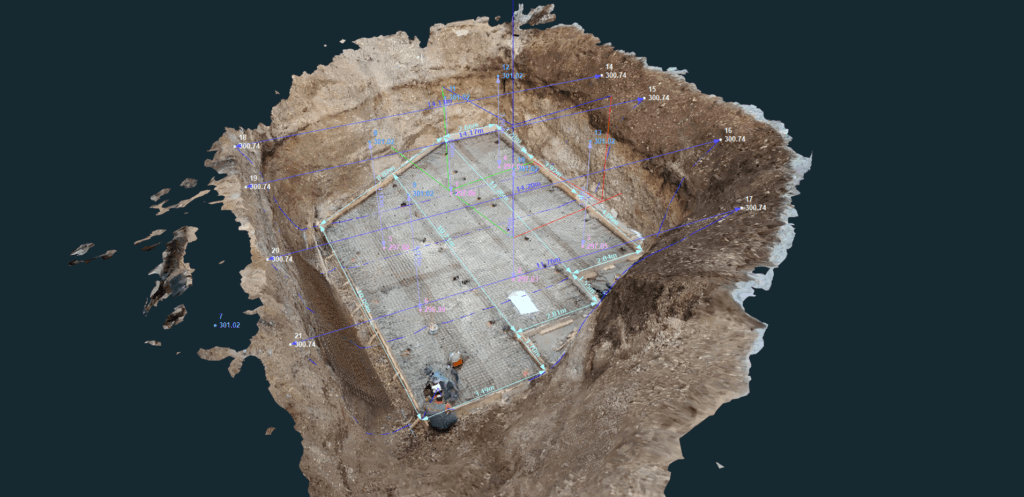
The footage was processed in 3Dsurvey to create accurate 3D models of each construction stage.
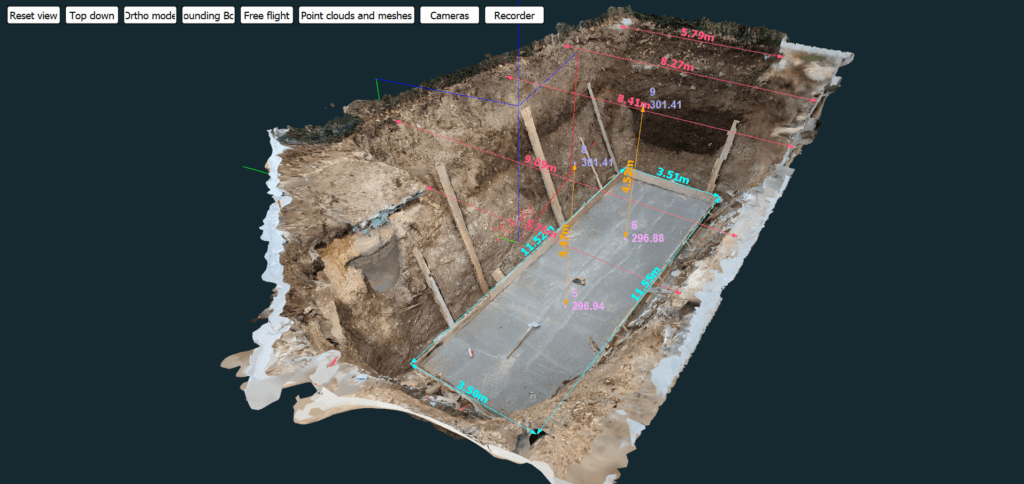
The resulting models enabled precise measurements, volume calculations, and comprehensive project documentation.
The project demonstrates how videogrammetry provides a fast and cost-effective solution for documenting petrol tank replacement projects.
Introduction
Videogrammetry is a cutting-edge technique in 3D modeling that transforms video footage into detailed 3D representations. This process involves analyzing video frames recorded from various angles.
The software identifies common points across these frames and maps these shared features to understand the spatial relationships within the scene. Using this data, the software reconstructs the 3D geometry, creating a precise digital replica of the captured object.
Videogrammetry is particularly useful for documenting construction projects such as underground petrol tank replacement, petrol tank excavation, and petrol tank installation. It uses accessible tools to create detailed 3D models.
We used a Pixel 7a mobile phone along with a Redcatch external RTK device for precise geographical location, achieving accuracy within 10 cm. This approach reduces costs and enhances portability, making it perfect for on-site data capture, especially where traditional methods are impractical or drone flights are restricted. It is also highly efficient, taking significantly less time than conventional techniques while providing accurate documentation for petrol tank construction and surveying projects.
Stages of an underground petrol tank replacement project
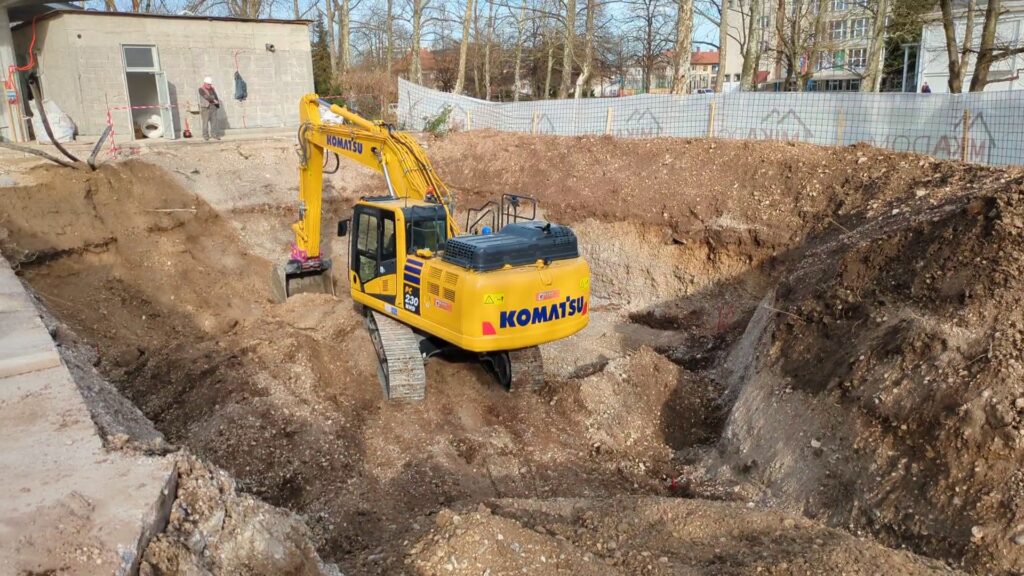
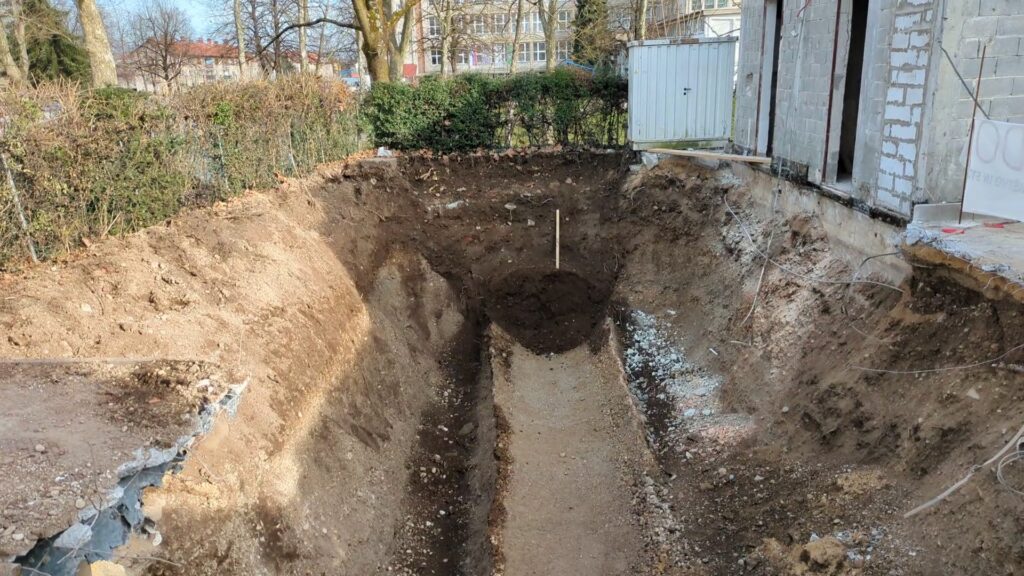
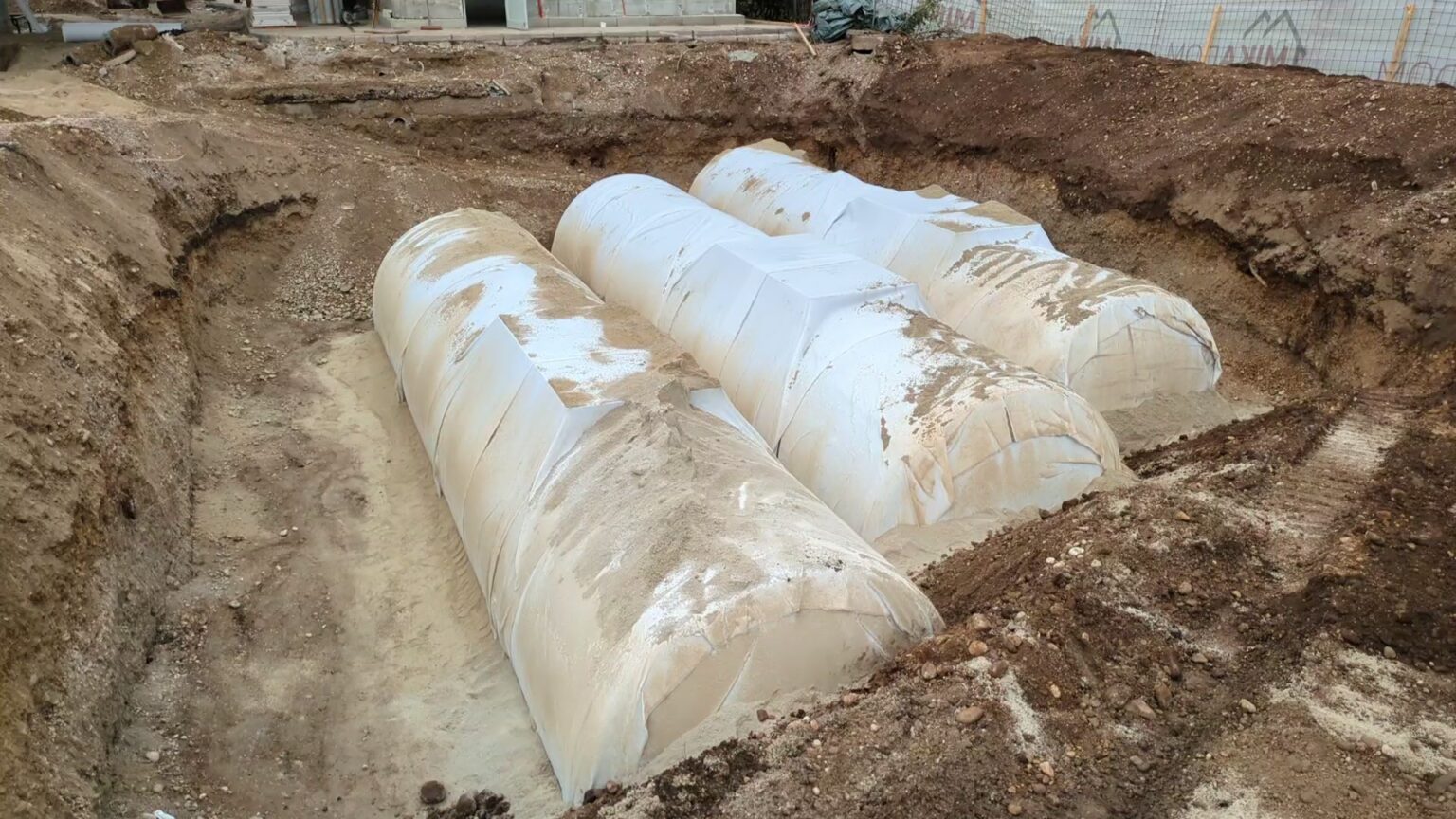
The petrol station construction project involved replacing underground petrol tanks at two locations. The large hole contained three petrol tanks, while the small hole contained one petrol tank.
To document the progress in detail, we made video recordings at each stage and used videogrammetry to transform them into 3D models. These models provided a complete digital record of the petrol tank replacement process, from excavation to final petrol tank installation.
Stage 1: Digging out the old petrol tanks
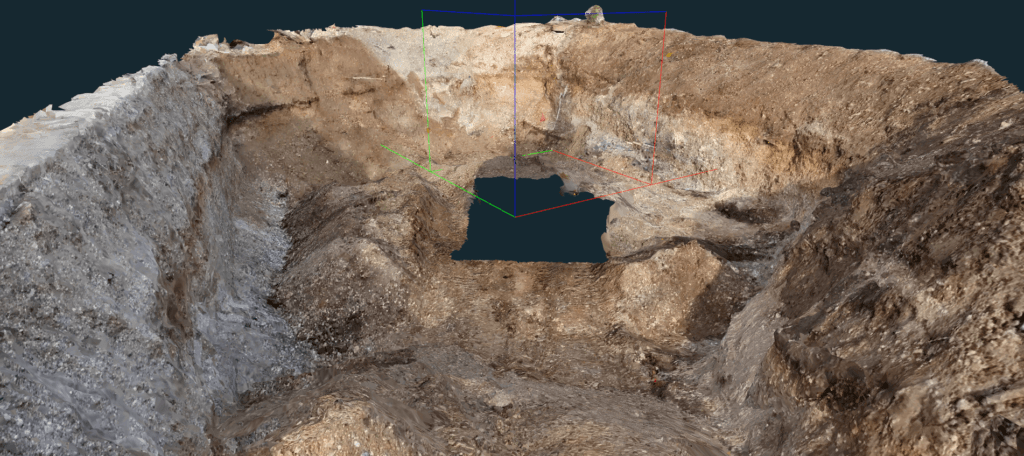
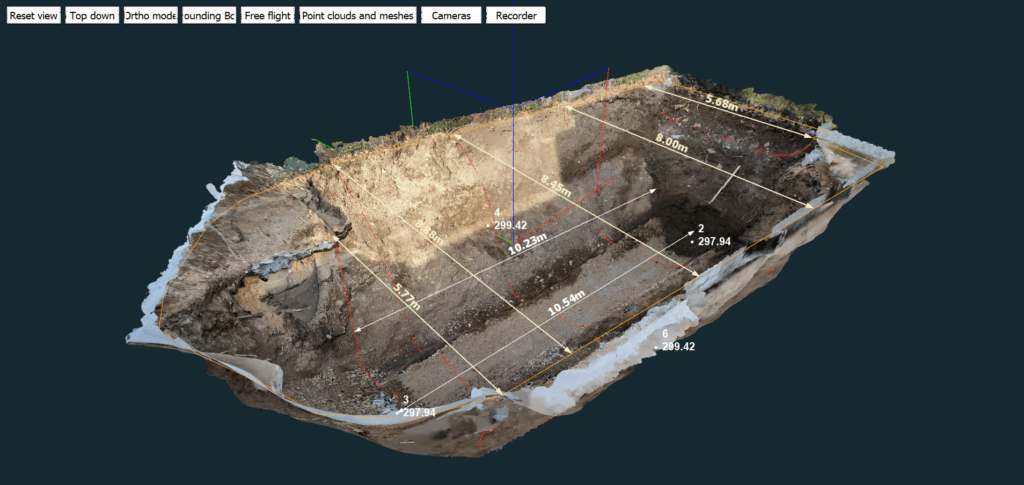
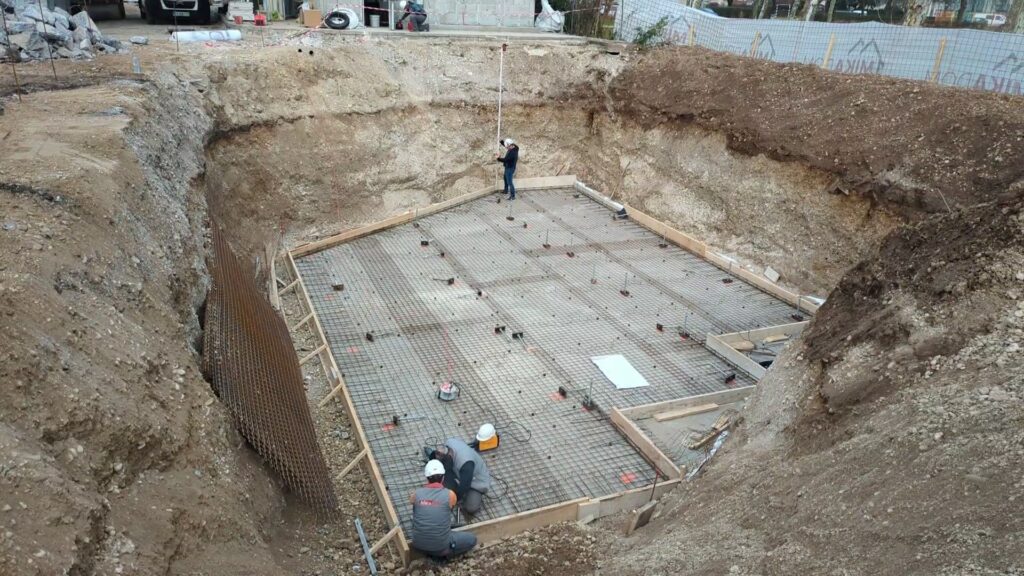
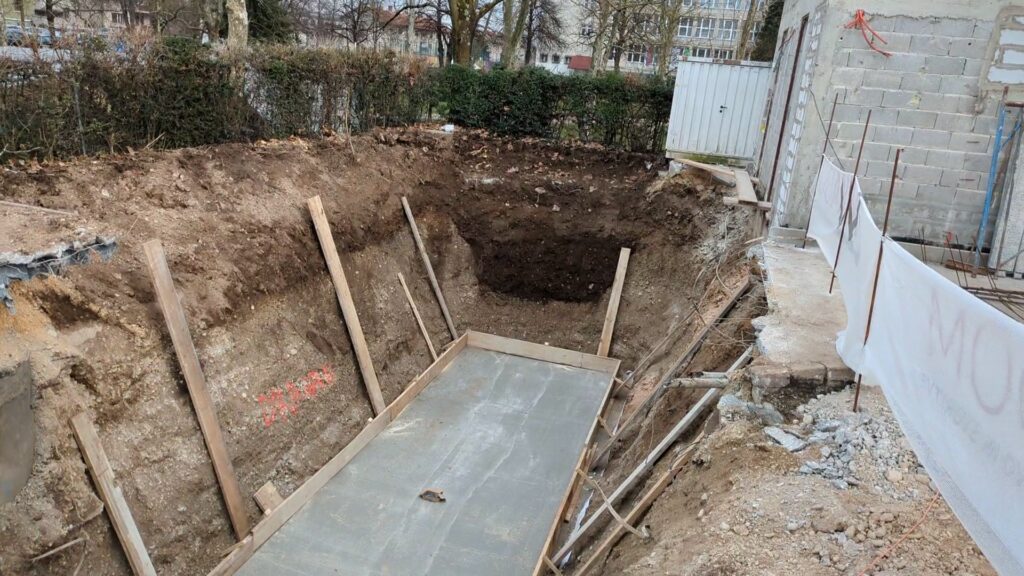
During this initial stage, the focus was on capturing the excavation process for the large hole containing three petrol tanks. Just like with the large hole, we documented the excavation process for the small hole containing a single petrol tank through video recording. This footage captured the dimensions and depth of the excavation, providing valuable insights into the specific requirements for installing the new petrol tank.
a) Large hole.
b) 3D mesh of the large hole in stage 1.
Date: 15th February 2024
Video Length: 67 s
Number of Extracted Frames: 135
Reprojection Error: 1.28 px
a) Small hole.
b) 3D mesh of a small hole in stage 1.
Date: 15th February 2024
Video Length: 67 s
Number of Extracted Frames: 135
Reprojection Error: 1.28 px
Stage 2: Constructing foundations for new tanks
The second stage involved constructing foundations for the new petrol tanks. The video footage captured the placement of base materials, reinforcement structures, and concrete pouring, ensuring a stable and secure base for the new petrol tank installation.
Accurate documentation of this stage is essential for ensuring long-term safety and stability of the underground petrol tank system.
Large hole in stage 2.
3D mesh of a large hole in stage 2.
Date: 19th February 2024
Video Length: 85 s
Number of Extracted Frames: 175
Reprojection Error: 1.53 px
Small hole in stage 2.
3D mesh of a small hole in stage 2.
Date: 19th February 2024
Video Length: Video 1: 58 s, Video 2: 59 s, Video 3: 58 s
Number of Extracted Frames: 352
Reprojection Error: 1.32 px
Stage 3: Installing the new petrol tanks
The final stage involved installing the new petrol tanks into their designated positions within both holes.
Videogrammetry enabled accurate documentation of the petrol tank installation process, creating a complete digital record of the placement and positioning of each petrol tank. The resulting 3D models can be used for verification, project documentation, and future maintenance of the underground petrol tank infrastructure.
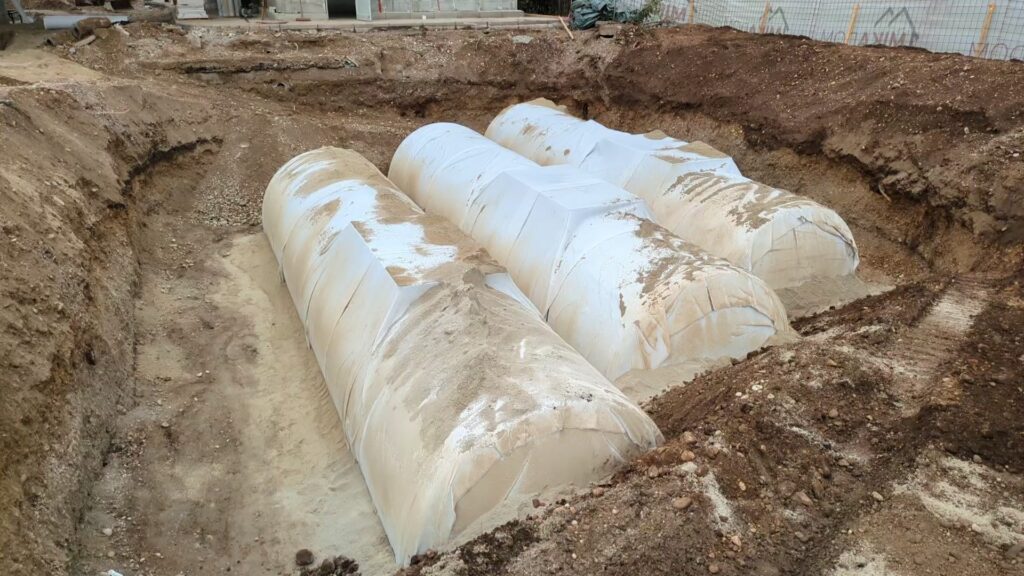
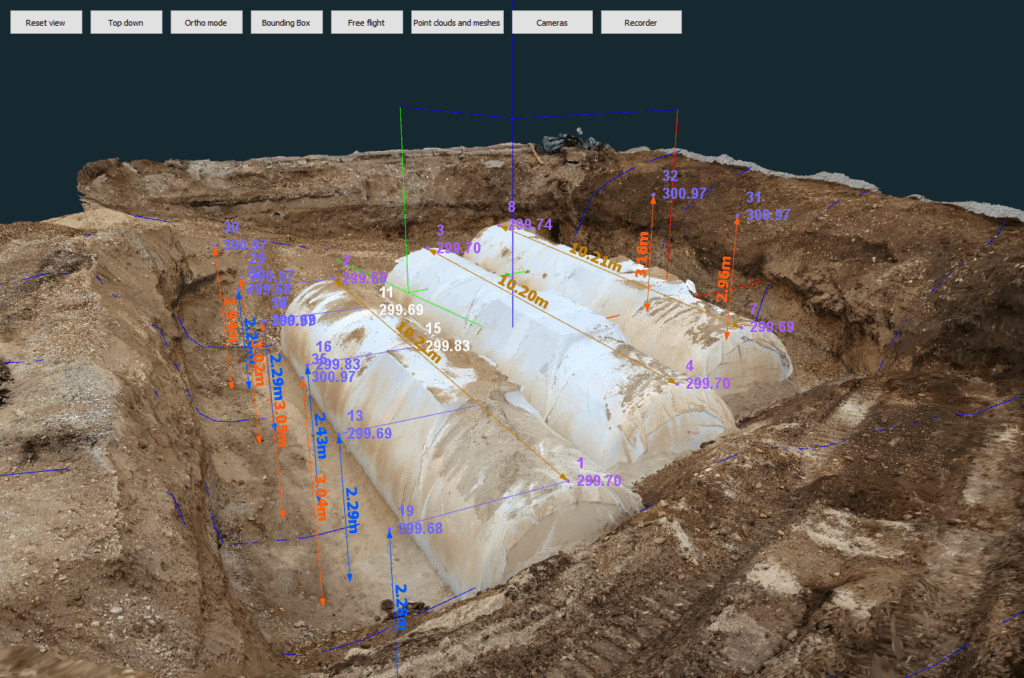
Large hole in stage 3.
3D mesh of a big hole in stage 3.
Date: 28th February 2024
Video Length: Video 1: 111 s, Video 2: 84 s
Number of Extracted Frames: 393
Reprojection Error: 1.39 px
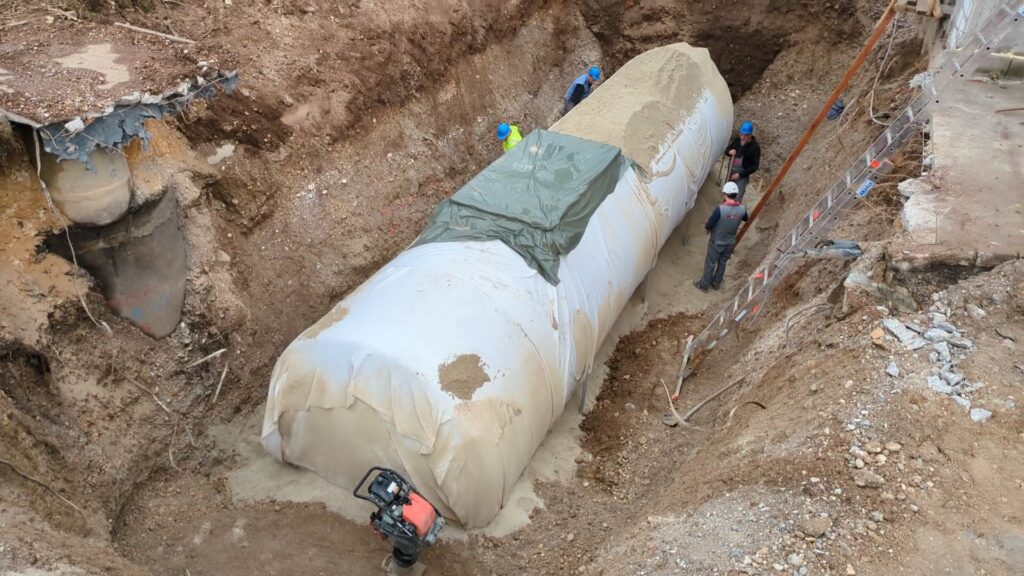
Small hole in stage 3.
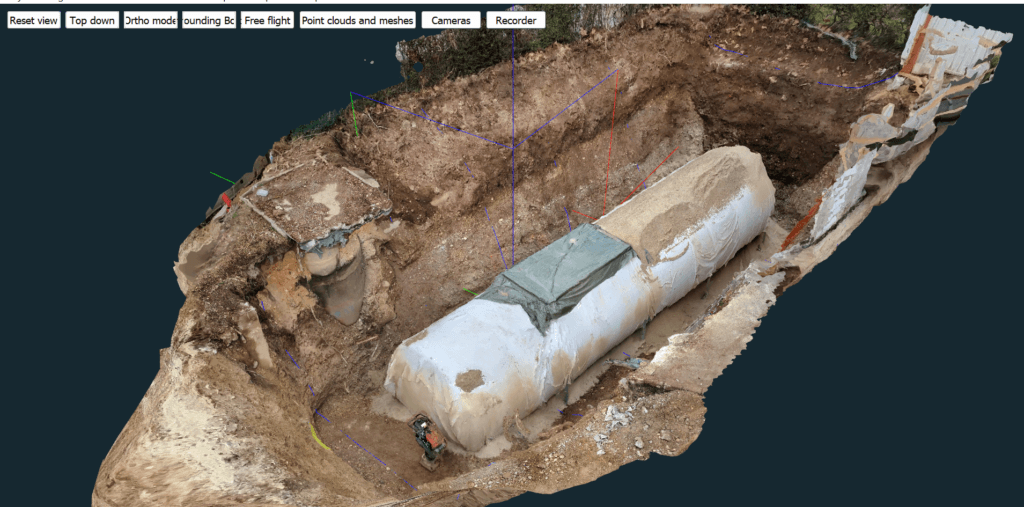
Small hole in stage 3.
Date: 28th February 2024
Video Length: Video 1: 111 s, Video 2: 84 s
Number of Extracted Frames: 393
Reprojection Error: 1.39 px
Conclusion
By capturing video footage at each stage of construction for both the large and small holes, this project effectively utilized videogrammetry to create a detailed 3D record of the entire underground petrol tank replacement process. This method is highly effective because it provides precise and accurate documentation, which is crucial for ensuring quality, safety, and compliance in petrol tank construction projects.
Using videogrammetry for petrol tank excavation, petrol tank foundation construction, and petrol tank installation provides clear insights and reliable data throughout the project lifecycle. The generated 3D models support accurate measurements, volume calculations, and project verification, ensuring that every aspect of the petrol tank replacement project is precisely recorded and analysed.
This project demonstrates how videogrammetry and 3Dsurvey can improve the documentation of underground petrol tank replacement projects by delivering fast, accurate, and cost-effective results for contractors, surveyors, and petrol station operators.
If you haven’t yet, start your 14-day free trialnow and get it going with 3Dsurvey and its videogrammetry feature.